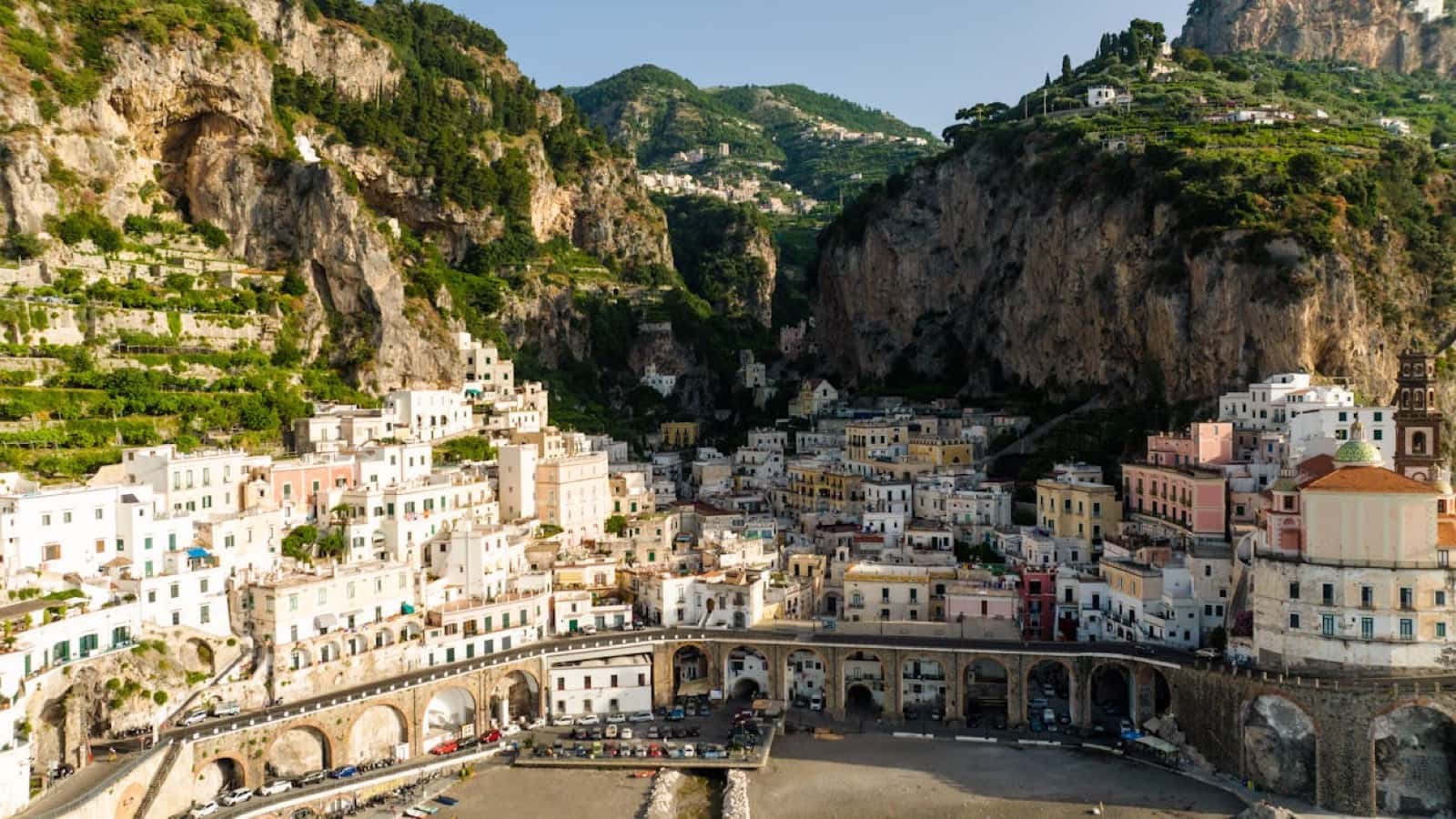
Most first-time visitors book Italy for July or August because that's when their schedules allow and that's what "summer in Italy" sounds like — but the data tells a different story. ENIT visitor statistics, historical flight pricing, and years of community consensus on r/italy and r/ItalyTravel all point to the same overlooked window: September delivers nearly identical weather to August, 15-25% lower hotel rates, 20-30% cheaper flights from US hubs, and meaningfully shorter queues at every major site. If you have flexibility on dates, this is the single highest-leverage decision you can make about an Italy trip.
How we evaluated
This verdict is built from publicly available data, not personal travel experience. We pulled four primary sources:
- ENIT (Italian National Tourism Board) monthly visitor statistics, which publish official inbound tourist counts by month and clearly identify Italy's peak season.
- Google Flights historical pricing for the three primary US-to-Italy routes — Rome (FCO), Milan (MXP/LIN), and Venice (VCE) — comparing August vs. September fares from major US hubs.
- r/italy and r/ItalyTravel community consensus threads, where the same visitor-timing questions get answered repeatedly by people who live in Italy or have visited multiple times.
- ISPRA and regional Italian meteorological data, which document monthly temperature and rainfall averages for Rome, Florence, and the major coastal regions.
No section of this article reflects first-hand testing. Every claim below is sourced from one of those four datasets.
The verdict
September is the optimal window to visit Italy for the classic Rome–Florence–Venice–Amalfi itinerary. ENIT data shows August as the single peak international tourism month of the year; September sees a sharp and immediate drop. Weather stays summer-warm without August's punishing heat — Rome averages 22-27°C in September versus regular 35°C+ days in August. Flight pricing on US-to-Italy routes consistently runs 20-30% below August, and hotel rates in Rome, Florence, and the Amalfi Coast typically run 15-25% lower than peak August dates.
The catch is narrow: if your trip is centered on beach-and-pool time in Sardinia, Puglia, or southern Sicily, peak summer still wins on water temperature and full beach-club operation. For everything else — cities, food, hill towns, the Amalfi Coast above the waterline, the lakes — September is the better trip at a lower price.
The evidence
ENIT visitor data shows a sharp September drop
Italy's national tourism board publishes monthly inbound visitor statistics, and the pattern is consistent year over year: July and August are the peak international-arrival months, with August at the top. September shows a steep decline as European school holidays end across France, Germany, and the UK, and — crucially — domestic Italian tourists return home from their own ferie (annual holidays).
That second effect compounds the first. In August you are competing with international tourists and Italians on holiday at the same coastal towns and hill towns. In September both populations recede simultaneously. Major sites that show hours-long queues in August move to manageable wait times within a two-week window after Italian schools resume.
Flights run 20-30% cheaper, hotels 15-25% cheaper
Google Flights historical pricing for US-to-Italy routes shows a consistent pattern across Rome (FCO), Milan (MXP and LIN), and Venice (VCE). August fares from major US hubs typically run 20-30% above September equivalents on the same routing and same advance-purchase window. The delta is largest on the most heavily booked dates — early-to-mid August — where the gap can stretch wider still.
Hotel pricing tracks the same curve. Rate data for major properties in Rome, Florence, and the Amalfi Coast shows September rates running 15-25% below August peak dates for equivalent room categories. On a two-week trip, this stacking effect — cheaper flights and cheaper hotels every night — typically saves a couple well over a thousand dollars before any other adjustments.
The weather is summer without the suffering
ISPRA and regional meteorological data make the climate trade-off clear. Rome regularly hits 35°C+ on August afternoons, with overnight lows that often stay above 22°C — uncomfortable for anyone walking the city all day. September averages 22-27°C with cooler evenings, and historical rainfall remains low through the month.
The Amalfi Coast holds excellent beach weather through late September, with sea temperatures only beginning to fall in early October. Florence is the starkest contrast: r/italy community members repeatedly describe August in Florence as "a convection oven" because the city's stone-walled historic center traps heat. The same threads describe September as "the real Italian summer" — warm, walkable, and survivable for the multi-hour outdoor itineraries the city requires.
The Ferragosto factor catches August visitors off guard
August 15 is Ferragosto, Italy's national holiday, and the cultural effect extends well beyond a single day. Many locally-owned restaurants, artisan shops, butchers, bakeries, and small service businesses close for one to two weeks around the date — a tradition known as ferie agostane. Tourists who arrive expecting a fully operating Italy find boarded-up neighborhood trattorias, shuttered family-run shops, and reduced local life in exactly the places they came to experience.
September resolves this completely. By the first week, locally-owned restaurants are back to full operation, neighborhood markets are running at normal volume, and the working version of Italian daily life — the one most travelers actually came for — is fully on display.
Community consensus is unusually unified
For a question this commonly asked, r/italy and r/ItalyTravel return remarkably consistent advice: go in September, or failing that, late May or early October. The "avoid August" guidance appears in nearly every "when should I visit?" thread, often from Italian users themselves. Specific data points that recur:
- Cinque Terre trails are described as dangerously crowded on the Monterosso–Vernazza segment in August, with bottlenecks that have prompted local capacity-management measures. September threads describe the same trails as manageable.
- Uffizi Gallery in Florence typically requires booking weeks in advance for July and August visits; September threads consistently report same-day or next-day ticket availability for the same time slots.
- Vatican Museums show similar booking-window compression in August and meaningfully more flexibility in September.
Community consensus this consistent across years and threads is itself a data point — the people who have done this trip multiple times converge on the same answer.
Who it's best for
For: First-time Italy visitors
If you're doing the canonical Rome–Florence–Venice–Amalfi loop on your first trip, September is the version of that itinerary you actually want. The Uffizi is bookable, Cinque Terre is walkable, the Vatican line moves, and the weather still looks like the postcards. You'll see the same Italy August visitors see — minus the queue management, the Ferragosto closures, and a meaningful share of the heat.
For: Value-conscious travelers
The savings stack. Flights from US hubs typically run 20-30% below August, and hotels in Rome, Florence, and the Amalfi Coast typically run 15-25% lower. On a two-week trip for two, that's a four-figure difference for the same itinerary, the same weather, and a better experience on the ground.
For: Food-focused travelers
September is when Italy's food calendar genuinely starts. White truffle season opens in Piedmont and other northern regions, grape harvest begins across Tuscany and the Veneto, and locally-owned restaurants are back to full operation after ferie agostane. August visitors often find the family-run trattoria they read about closed for holiday; September visitors find it open and at the start of its best season.
What it doesn't beat
September is the strongest all-around window, but it's not the right answer for every trip:
- Spring (April and May) beats September for wildflowers in Tuscany, cooler hiking weather in the hill towns, and lower humidity. If your trip is centered on countryside walking or photography rather than coastal time, late spring is the stronger choice.
- Peak summer (July and August) beats September for beach-and-pool trips to Sardinia, Puglia, and the best coastal stretches of Sicily. Sea temperatures are warmer, beach clubs are at full operation, and the southern coastal scene is at its peak. Heat and crowds are real, but for a sun-and-water trip, those are the trade-offs.
- December beats September for Christmas markets in northern Italian cities — Bolzano, Trento, and Merano in particular run some of the most highly regarded markets in Europe. September is irrelevant to that specific trip.
If your itinerary doesn't fall into one of those three buckets, September is the better window.
Verdict
The Verdict
September Travel Window for Italy
Best For
First-time Italy visitors and value-seekers who want warm weather without peak crowds
Beats
July and August on crowd density, price, and overall comfort
Doesn't Beat
Peak summer for beach-and-pool trips to Sardinia or Puglia
Based on 4 data sources · Last verified May 1, 2026
Sources
- ENIT (Italian National Tourism Board) monthly visitor statistics — official inbound visitor counts by month identifying peak (July–August) and shoulder (September–October) seasons.
- Google Flights historical pricing for US-to-Italy routes — fare variation across Rome (FCO), Milan (MXP/LIN), and Venice (VCE) showing September running 20-30% below August on equivalent routings.
- r/italy and r/ItalyTravel community consensus threads — recurring "when to visit" discussions surfacing September as the near-universal recommendation, with specific feedback on Cinque Terre, the Uffizi, and Florence summer heat.
- ISPRA and regional Italian meteorological data — monthly temperature and rainfall averages for Rome, Florence, and the Amalfi Coast confirming the August-vs-September climate gap.