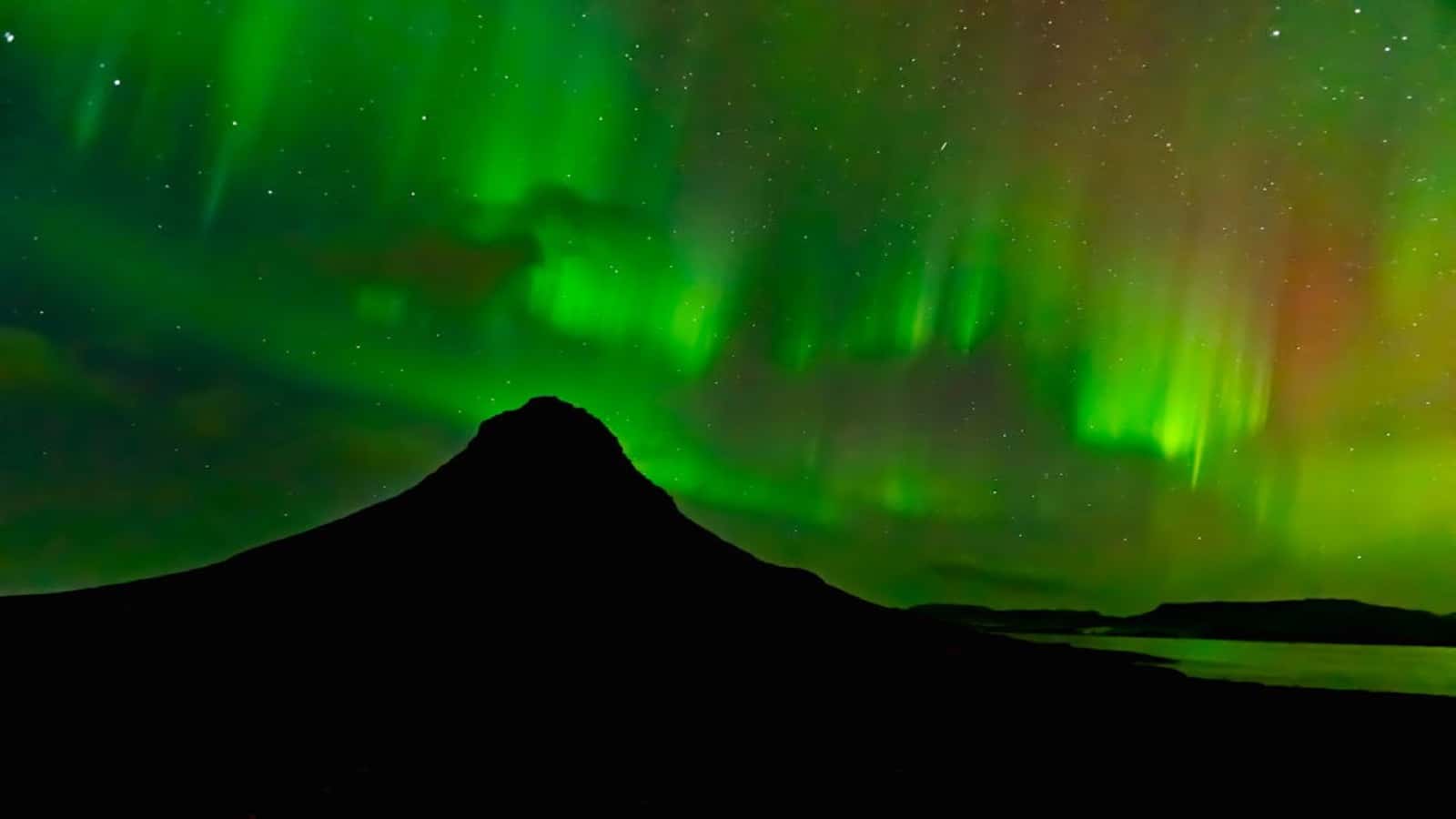
Most travelers planning their first Iceland trip assume the deeper into winter they go, the better their northern lights odds — and that assumption is mostly wrong. The aurora needs darkness and geomagnetic activity, and the geomagnetic record published by Veðurstofa Íslands (Icelandic Met Office) shows activity peaks around the spring and autumn equinoxes, not midwinter. That fact, combined with full highland road access, post-summer pricing, and tolerable temperatures, makes September to early October the window that wins on the math the rest of the calendar can't replicate.
How we evaluated
This piece pulls from four public sources. Inspired by Iceland (the Icelandic Tourist Board) publishes detailed monthly visitor arrival data that identifies exactly when international tourism peaks and when it softens. Veðurstofa Íslands (Icelandic Met Office) publishes aurora probability forecasts and the underlying geomagnetic activity record — including the well-documented equinox-related elevation in activity. Google Flights historical pricing data covers the major US-to-Reykjavik (KEF) routes and shows month-over-month fare variation. And r/VisitingIceland community consensus threads — where the same questions get asked and the same answers surface year after year. No first-hand trips, no insider sources, just the existing public record.
The verdict
September to early October earns a Worth-It Score of 8.5 as the Iceland sweet spot. It is the first window after the midnight sun ends in which there is enough astronomical darkness to actually see auroras, it lands on the autumn equinox-elevated geomagnetic window that Icelandic Met Office data identifies, the Ring Road and the F-roads (highland routes) are still open before winter closures, summer crowds have dropped 20-30% from August peak, and flight pricing softens 15-25% versus June-August on the same routes. Midwinter is not meaningfully better on aurora probability and is meaningfully worse on cold, daylight, and inland access.
The evidence
The aurora mathematics
The northern lights require two things: darkness and geomagnetic activity. The midnight sun keeps Iceland's summer skies too bright for auroras through mid-August, but darkness returns quickly — by September, Reykjavík sees roughly 6-8 hours of astronomical darkness per night, which is more than enough viewing window. The second variable is the one most travelers misunderstand. Veðurstofa Íslands (Icelandic Met Office) aurora probability data indicates that geomagnetic activity peaks around the spring and autumn equinoxes (March and September), not at the winter solstice. This is the Russell-McPherron effect — a well-documented geomagnetic phenomenon driven by the alignment between Earth's magnetic field and the solar wind near the equinoxes. The practical implication: September delivers returning darkness AND elevated activity at the same time, and December does not necessarily out-perform it on probability.
The road access advantage
Iceland's F-roads — the highland interior routes that lead to Landmannalaugar, Þórsmörk, and the central volcanic landscapes — are closed for the winter and only typically open from June through late September. December and January visitors are effectively limited to the Ring Road and coastal areas, which means a meaningful portion of Iceland's most spectacular inland scenery is simply unreachable. September visitors get the rare combination: full highland access while it's still open, plus the Ring Road, plus the first viable aurora window of the season. No other month offers all three at once.
What Inspired by Iceland arrival data shows
Inspired by Iceland (Icelandic Tourist Board) data shows June, July, and August as the dominant peak window, accounting for a large share of annual international arrivals. September visitor counts drop roughly 20-30% from the August peak. That gap shows up in practical ways travelers feel: shorter waits at Seljalandsfoss and Skógafoss, easier same-week booking on Northern Lights tours and Blue Lagoon entries, and softer accommodation pricing across the Ring Road. The season is far from empty, but the difference between September and August on crowd density at the famous photo stops is real and consistent year over year.
The pricing data
Historical pricing data from Google Flights for US-to-Reykjavik (KEF) routes consistently shows September fares running 15-25% below the June-August peak on the same origin-destination pairs. The mechanism is straightforward: summer demand inflates peak pricing, and that demand drops fast as the school calendar resumes and the midnight sun ends. Hotel pricing in Reykjavík and along the Ring Road follows the same curve. Midwinter pricing (December and January, excluding the Christmas-New Year peak) can be lower still in raw fare terms, but community consensus consistently rates the cold-and-darkness trade at that price as steep — especially for first-time visitors not equipped for sustained sub-zero outdoor time.
Community consensus on September versus midwinter
Community consensus on r/VisitingIceland shows September and October surfacing repeatedly as the recommended windows for first-time aurora chasers. The recurring arguments from experienced Iceland travelers in those threads track the same logic: midwinter temperatures (regularly -5 to -15°C, with wind chill pushing colder) make extended outdoor aurora viewing physically punishing for unprepared visitors, December's daylight is so limited that seeing the rest of Iceland's landscapes becomes a constraint rather than a feature, and the equinox-window aurora probability is not meaningfully lower than midwinter. The phrase that surfaces most often in these threads is some variation of "September gives you the lights AND the country."
What you give up
Visiting in September means missing the puffin nesting season on cliffs like Látrabjarg, which winds down in mid-August. It means the midnight sun is gone, so you trade 24-hour daylight for actual nights. And the F-roads close at the end of September in most years, so a late-September trip is timing-sensitive — a mid-September arrival is safer than a late-September one if highland access matters. Travelers whose primary purpose is puffins, midnight sun, or extended highland trekking should plan for July-August with eyes open about the cost and crowd trade-off.
Who it's best for
For: Northern lights chasers
September delivers what the rest of the calendar cannot combine: real astronomical darkness, equinox-elevated geomagnetic activity per Icelandic Met Office data, and temperatures that allow you to actually stand outside for an hour waiting for the show. Midwinter is not meaningfully better on probability and is meaningfully worse on physical comfort.
For: Road trip and self-drive travelers
The Ring Road is fully open, the F-roads are still passable through most of September, and traffic at the famous stops has dropped from August peak. Self-drivers get the full breadth of Iceland's inland and coastal landscapes in a single trip, which is impossible from November through May.
For: Value-conscious Iceland visitors
The combination of 15-25% lower flight pricing, softer accommodation rates, and meaningfully lower crowd density at major sites compounds the value. The same itinerary in September costs less and feels less rushed than in July, with the bonus of aurora potential July cannot offer at all.
What it doesn't beat
September to early October does not beat June through August for midnight sun, puffins, or the warmest temperatures Iceland gets. It does not beat December and February for the deepest winter atmosphere, snow-blanketed landscapes, and the Christmas-season Reykjavík experience. And it does not beat March and April for travelers who specifically want auroras paired with returning daylight rather than shortening days, which is a real preference for some itineraries. The strategy is "best window for first-time aurora chasers who also want the rest of Iceland" — not "best window for any specific Iceland experience." If you have a single must-have, plan around that. If you want the full country with a real shot at the lights, plan around September.
Verdict
The Verdict
September to Early October Window for Iceland
Best For
Travelers wanting northern lights access with road accessibility and post-summer pricing
Beats
December and January on accessibility, road conditions, and daylight for sightseeing
Doesn't Beat
Peak summer (June-August) for midnight sun, puffins, and highland road access
Based on 4 data sources · Last verified May 1, 2026
Sources
- Inspired by Iceland (Icelandic Tourist Board) visitor arrival statistics (expert-analysis) — official inbound traffic counts by month
- Veðurstofa Íslands (Icelandic Met Office) aurora forecast and probability data (expert-analysis) — equinox-elevated geomagnetic activity record and aurora probability forecasts
- Google Flights historical pricing for US-to-Reykjavik routes (pricing-data) — month-over-month fare variation on KEF routes
- r/VisitingIceland and r/Iceland community consensus threads (community-consensus) — recurring September and October recommendations for first-time aurora chasers