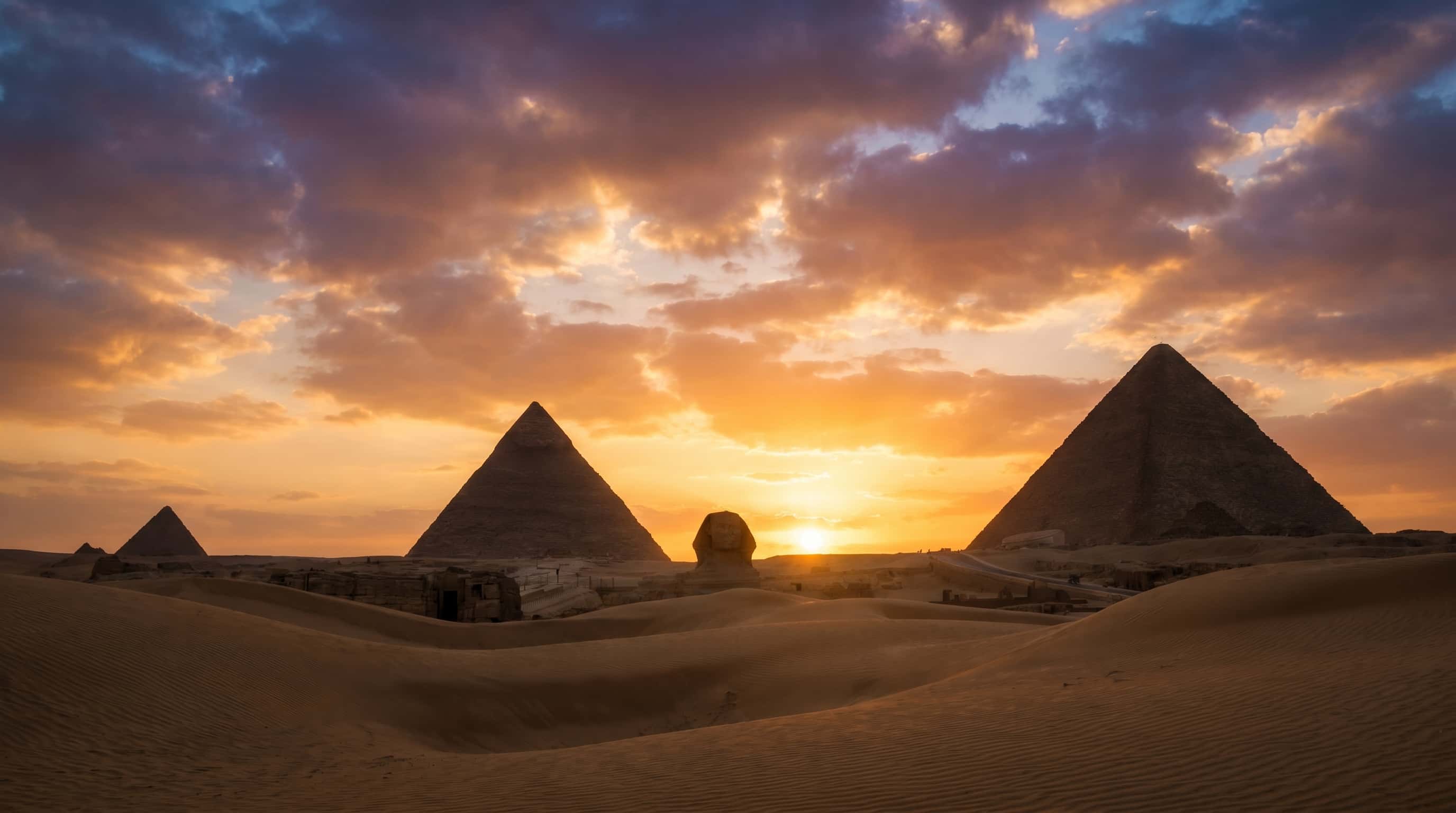
Egypt's conventional timing wisdom says: avoid summer (too hot), visit October-November (ideal weather). This advice was correct for decades. It is now counterproductive, because everyone follows it. October and November have become Egypt's most crowded and most expensive months — every travel site and tour operator funnels visitors toward the same window simultaneously. February delivers nearly identical temperatures in Luxor and Aswan (25-28°C average highs — actually optimal for outdoor temple visits), cooler and comfortable conditions in Cairo (18-22°C), 20-30% lower hotel pricing (based on Q1 2026 booking data), and a fraction of October's crowd density at the Valley of the Kings, Karnak, and Abu Simbel. The entire Nile cruise experience is measurably calmer. February is the answer the algorithms haven't caught up to yet.
How we evaluated
This piece pulls from three public sources. Egyptian Tourism Authority monthly visitor statistics, which document the convergence of mass tourism on the October-November window over the past decade. Egyptian Meteorological Authority temperature records for Cairo, Luxor, and Aswan, which show February and October are climatically much closer than the conventional wisdom implies. And r/Egypt and r/solotravel community threads, where experienced repeat travelers increasingly recommend February as the under-the-radar answer. No first-hand visits — only the existing public record.
The verdict
February earns a Worth-It Score of 9.0 as the value window for Egypt that the mainstream travel industry has not caught up to yet. Temperatures in Luxor and Aswan are nearly identical to October's, Cairo is genuinely comfortable rather than warm, hotel pricing runs 20-30% below October peak (based on Q1 2026 booking data), and crowd density at the major sites is a fraction of October-November's. The trip experience is measurably better at meaningfully lower cost.
The evidence
ETA visitor volume data
Egyptian Tourism Authority monthly visitor statistics show October and November have become the year's two highest-volume international tourism months as global mass tourism advice has converged on this single window. The recommendation has been so consistent across travel media for so long that the resulting demand has compressed the experience — the same advice that was good in 2005 has produced a much worse 2026 outcome. February's visitor volumes have historically run 30-40% below October's, despite climate that is genuinely comparable for the Egypt experience.
The temperature data that breaks the conventional wisdom
Egyptian Meteorological Authority records show what most timing advice quietly ignores. Luxor average highs: October 33°C, February 25°C. Aswan average highs: October 35°C, February 25-26°C. Cairo average highs: October 28°C, February 21°C. February is not "winter" in any meaningful sense for Upper Egypt — it's actively the more comfortable temperature window for outdoor temple touring, where October's 33-35°C highs at midday are noticeably hot. Cairo in February is genuinely pleasant rather than warm, with comfortable evenings.
The Nile cruise experience in February
Nile cruise availability in February is meaningfully better than in October-November. Pricing on comparable boats and itineraries runs 30-40% below October peak (based on Q1 2026 booking data). Crowd levels at standard cruise stops — Luxor Temple, Edfu, Kom Ombo, the Valley of the Kings — are dramatically lower, with shorter queues at the popular tombs and easier access to the most-photographed sites. The cruise experience itself, deck time and onboard pacing, is calmer with substantially fewer boats clustered at each stop.
Specific site comparison
The Valley of the Kings in October frequently sees queue-and-clear visitor management at the most popular tombs (Tutankhamun, Ramses VI). February crowds rarely require queue management at any tomb. Karnak temple complex absorbs October crowds reasonably well due to its sheer scale, but the pylon and hypostyle hall photography windows are visibly cleaner in February. Abu Simbel is the single most affected site: October-November visitor density at Abu Simbel can genuinely overwhelm the visit, while February remains manageable enough for unhurried experience of both temples.
The Abu Simbel solar alignment events
Twice per year — February 22 and October 22 — the rising sun aligns through the entrance of the Great Temple of Abu Simbel to illuminate three of the four statues in the inner sanctuary. This is one of Egyptian tourism's signature scheduled events. The October 22 event has become extremely crowded as it falls within peak season and gets heavy travel-industry promotion. The February 22 event draws significantly smaller crowds despite being the same astronomical phenomenon at the same site. For travelers who want the experience without the peak-season density, the February alignment is the clearly superior option.
The summer reality (and why February is nothing like it)
The "avoid summer" advice that anchors all Egypt timing recommendations exists for real reasons. Luxor averages 42°C highs in July, Aswan even higher, and outdoor temple touring at those temperatures is genuinely inadvisable for both comfort and safety. June through September is the legitimate avoid window. February is in no way comparable to summer — it shares no characteristics with the heat argument. The blanket "October-November is the answer" recommendation conflates two distinct realities: summer is bad (true), and therefore October is uniquely good (no longer true given current crowds).
Who it's best for
For: History and archaeology travelers
The Valley of the Kings, Karnak, Luxor Temple, the temples at Edfu and Kom Ombo, and Abu Simbel are the core anchors of an Egypt trip — and February delivers all of them at substantially lower crowd density with weather that is actively better for outdoor temple touring than October's higher temperatures.
For: First-time Egypt visitors
First-time visitors are most affected by mass-tourism crowd compression because they want to see the most-famous sites without prior context for what "uncrowded" looks like. February provides those sites at a fraction of October's density, which fundamentally changes the experience of seeing Tutankhamun's tomb, Abu Simbel, or the Pyramids of Giza for the first time.
For: Travelers who prioritize avoiding crowds over following conventional wisdom
The October-November Egypt recommendation is the clearest example in international travel of advice that has outlived its accuracy. Travelers willing to ignore the dominant recommendation get better weather for outdoor touring, lower pricing, and a meaningfully calmer experience at every major site.
What it doesn't beat
February does not beat October-November for travelers who specifically want maximum guided-tour infrastructure availability, the largest selection of group-cruise departures, or the social atmosphere of a peak-season group-travel environment — those are real October-November advantages. It does not beat the December-January window for travelers combining Egypt with European Christmas markets in a single trip. And nothing beats avoiding June through September entirely — that period remains genuinely prohibitive for outdoor temple touring regardless of any pricing argument.
Verdict
The Verdict
February Travel Window for Egypt
Best For
History and archaeology travelers who want the Valley of the Kings, Karnak, Luxor, and Abu Simbel at comfortable temperatures with 20-30% lower pricing and a fraction of peak-season crowds
Beats
October-November on crowd density, Nile cruise pricing and availability, and the Abu Simbel solar alignment event crowd size
Doesn't Beat
October-November for travelers who prefer maximum guided-tour infrastructure and group-travel social environment; June-September is genuinely prohibitive for outdoor touring
Based on 3 data sources · Last verified May 15, 2026
Sources
- Egyptian Tourism Authority monthly visitor statistics (expert-analysis) — official tourism data showing October-November peak and February's lower visitor volumes
- Egyptian Meteorological Authority historical temperature data (expert-analysis) — long-term records for Cairo, Luxor, and Aswan showing February and October temperature parity
- r/Egypt and r/solotravel Egypt timing community discussions (community-consensus) — community discussions identifying February as the undervisited optimal window