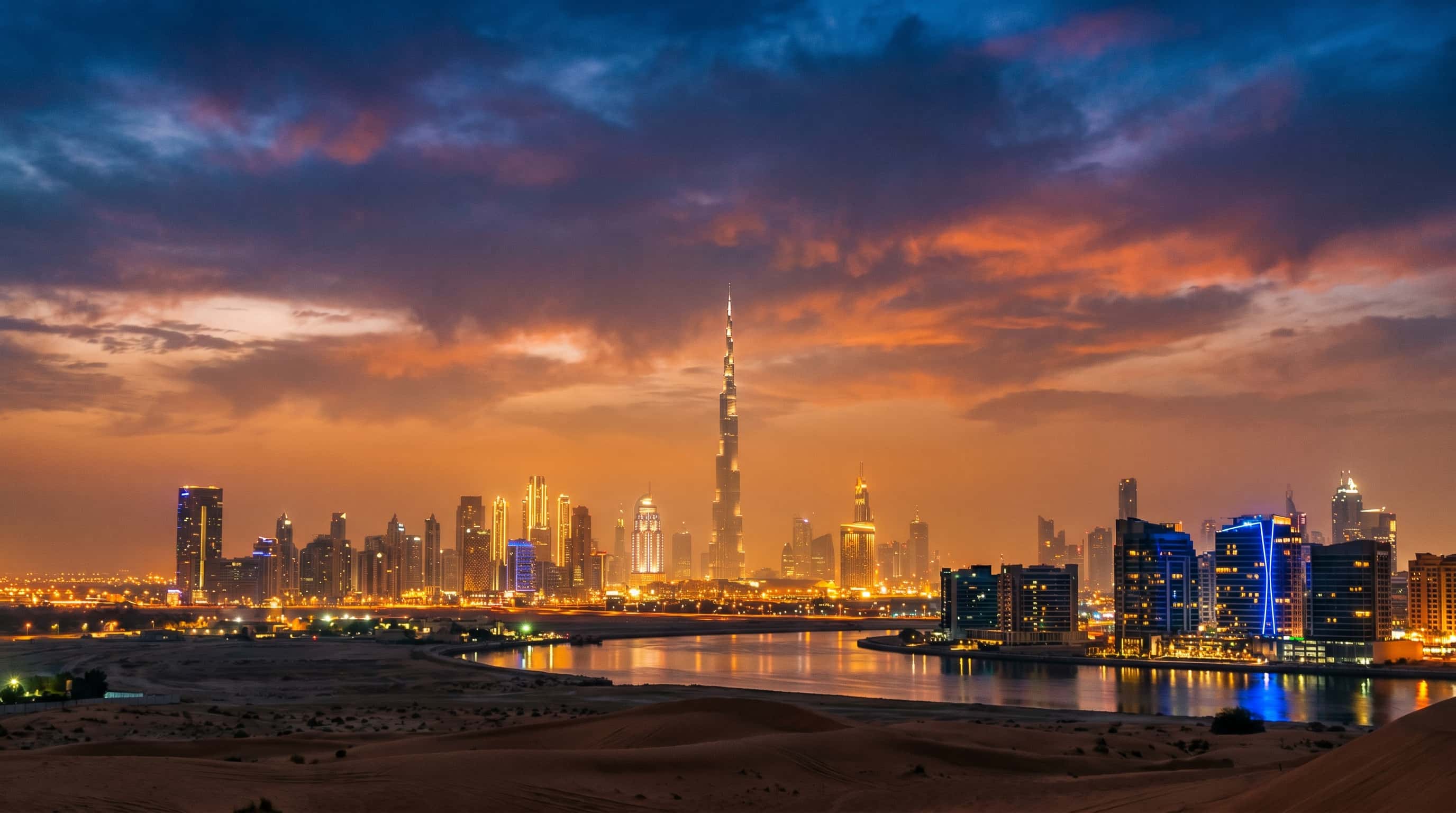
Dubai in July and August averages 45°C (113°F) daily highs — and hotel prices drop 50-60% from the November-March peak. What most travelers don't consider: the experiences that define a Dubai visit are almost entirely indoors. Dubai Mall (the world's largest by total area), the Dubai Aquarium, Ski Dubai (an indoor ski slope operating year-round inside a mall), the Burj Khalifa observation deck, the gold and spice souks (largely covered), and the city's flagship hotels themselves — all air-conditioned to the same standard in July as in January. A Dubai itinerary built around indoor luxury costs roughly half as much in summer with zero degradation in the experiences that make Dubai distinctive.
How we evaluated
This piece pulls from three public sources. Dubai Department of Economy and Tourism monthly visitor statistics, which document the winter-peak and summer-trough cycle with precise visitor volume data. Historical hotel pricing archives covering comparable five-star Dubai properties across seasons. And r/dubai and r/solotravel community threads, where summer Dubai visitors document the heat reality and indoor experience quality. No first-hand visits — only the existing public record.
The verdict
The June-September summer window earns a Worth-It Score of 7.5 for travelers whose Dubai itinerary centers on indoor experiences. Hotel pricing drops 50-60% from the winter peak (based on Q1 2026 booking data), flights soften meaningfully, and the indoor anchors of a Dubai trip operate identically year-round. The score is not higher because the heat genuinely eliminates outdoor experiences and is wrong for a meaningful slice of travelers.
The evidence
DET data on the winter peak vs. summer trough
Dubai Department of Economy and Tourism monthly visitor statistics show a consistent annual pattern: winter months (November through March) are the peak, with January-February typically the highest-volume months, while summer (June-September) sits in a measurable trough. The visitor volume gap between February peak and August trough has historically run on the order of 30-40% — and that gap drives the pricing differential downstream. The pattern is stable across years and reflects the simple reality that mass-market leisure travel avoids the summer heat.
The heat reality
What 45°C means practically: outdoor time beyond brief transfers between climate-controlled spaces is genuinely inadvisable. The walk from a hotel lobby to a waiting taxi is manageable; an afternoon walking tour of the souks is not. Overnight temperatures in the 30°C range are more bearable, and dawn or late-evening outdoor activity is feasible. But the daytime experience is fundamentally indoor. r/dubai community reports consistently warn first-time summer visitors that "indoor city" is not an exaggeration — it's a structural reality of summer travel.
The indoor experience audit
The experiences that anchor most Dubai trips are climate-controlled year-round: Dubai Mall, Dubai Aquarium, Ski Dubai (the indoor ski slope inside Mall of the Emirates), the Burj Khalifa observation deck, IMG Worlds of Adventure, the Dubai Frame, the covered sections of the gold and spice souks, every flagship hotel lobby and restaurant, and the elaborate hotel pool decks (most major hotels chill or shade pool water and provide misting systems for poolside lounging). For a traveler whose Dubai list is shopping, towers, aquariums, hotel experiences, and indoor entertainment, the summer experience is functionally identical to winter.
The 50-60% pricing gap
Historical hotel pricing data for comparable Dubai five-star properties shows the gap clearly. Properties that command $400-700 per night in November-March often run $150-250 per night in July-August at the same room categories (based on Q1 2026 booking data). The gap is widest at the trophy properties — Atlantis The Palm, Burj Al Arab, and the major Palm Jumeirah resorts — because their winter pricing is anchored by international leisure peak demand that simply isn't present in summer. Flight pricing follows a similar but less dramatic curve.
The Ramadan consideration
Ramadan dates shift annually based on the lunar calendar and can fall anywhere across the Western year. During Ramadan, eating, drinking, and smoking in public during daylight hours are restricted in Dubai, even for non-Muslim visitors. Most hotels operate normally for guests, and many restaurants have dedicated tourist-facing arrangements, but the city's public daytime rhythm shifts noticeably. If visiting in summer, check whether Ramadan falls in your specific window — it's a real variable that affects the experience without being a deal-breaker.
Who summer Dubai is wrong for
The summer pricing gap is not a free win for everyone. Summer Dubai is wrong for travelers who specifically want desert safari (extreme heat makes daytime safaris dangerous and even evening safaris uncomfortable), beach club culture (outdoor pools and beaches at 40°C ambient are unpleasant for sustained use), outdoor dining at night markets, or the New Year's Burj Khalifa fireworks experience — which is a strict winter event and arguably Dubai's signature outdoor moment of the year.
Who it's best for
For: Budget-conscious luxury seekers
A weeklong stay at a flagship Dubai property in July at $200/night is a fundamentally different trip from the same week in February at $550/night. For travelers who want the Dubai luxury aesthetic but won't pay peak winter pricing, the summer window unlocks properties that are otherwise out of reach.
For: Indoor experience, shopping, and entertainment travelers
If your Dubai list is Dubai Mall, Burj Khalifa, the aquarium, Ski Dubai, hotel lobbies, and indoor entertainment, the summer experience is functionally identical to winter at half the price. The trip you'd plan in February works in July with negligible experiential difference.
For: Travelers with maximum schedule flexibility
The pricing gap rewards travelers who can ignore school calendars and conventional travel timing. The same Dubai itinerary that costs $7,000 in winter peak often lands at $3,800-4,500 in July-August for indoor-anchored trips — a meaningful gap for travelers with no calendar constraints.
What it doesn't beat
Summer Dubai does not beat November-March for desert safaris, beach clubs, outdoor dining, comfortable pool weather, or any itinerary built around outdoor time. It does not beat the December-January window for the New Year's Burj Khalifa fireworks experience — that's a strict winter event. And it does not beat the cooler shoulder months (October and April) for travelers who want decent outdoor weather without paying full peak pricing. If your trip is outdoor-anchored, ignore the summer pricing gap and book winter or shoulder season.
Verdict
The Verdict
June–September Summer Window for Dubai
Best For
Travelers whose Dubai itinerary centers on indoor luxury — shopping, Burj Khalifa, aquariums, hotel experiences — who want the Dubai aesthetic at 50-60% lower pricing
Beats
November-March on hotel and flight pricing; winter peak on availability at top properties without advance booking pressure
Doesn't Beat
November-March for outdoor desert experiences, beach clubs, outdoor dining, and comfortable pool weather; December-January for New Year's Burj Khalifa fireworks
Based on 3 data sources · Last verified May 15, 2026
Sources
- Dubai Department of Economy and Tourism monthly visitor statistics (expert-analysis) — official visitor volume data showing the winter-peak, summer-trough cycle
- Historical hotel pricing data for Dubai across seasons (pricing-data) — accommodation archives showing 50-60% drop between winter peak and summer trough
- r/dubai and r/solotravel summer visit community reports (community-consensus) — traveler accounts of summer heat reality and indoor experience quality