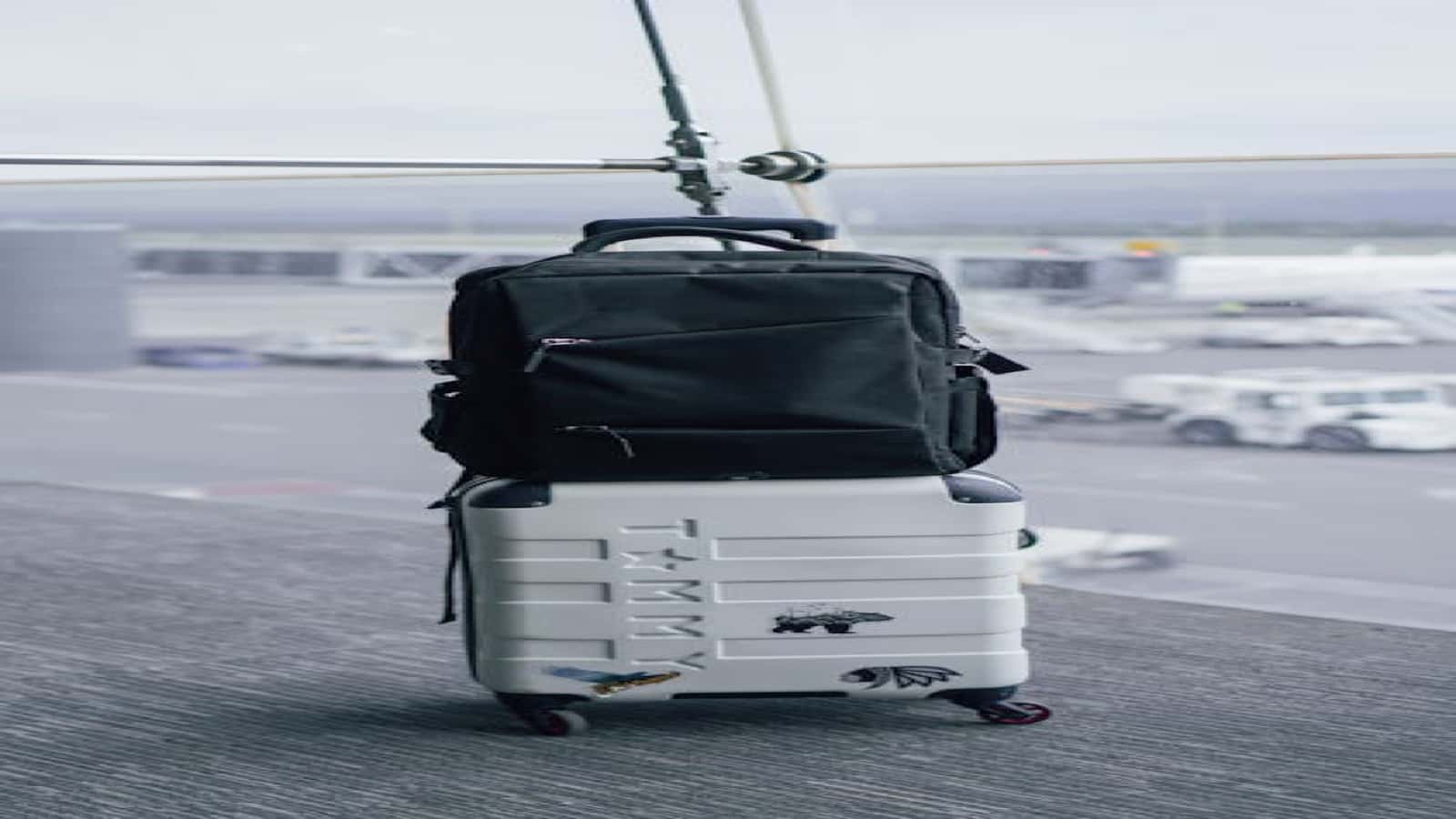
Away spent the last decade turning a polycarbonate suitcase into a lifestyle brand — color drops, airport sightings, a category-defining aesthetic. The marketing is excellent. The harder question is whether the bag underneath the marketing actually earns its $275 price tag, or whether you're paying a premium for the logo. Based on 3,000+ verified owner reviews and years of community discussion, the answer is more nuanced than either Away's pitch or its loudest critics suggest.
How we evaluated
This verdict is sourced entirely from publicly available data. Wayfarer Index has not personally tested, owned, or used the Away Carry-On.
The analysis draws on three primary sources:
- A pool of 3,000+ verified purchase reviews on Amazon for the Away Carry-On (Original), analyzed for recurring positive and negative themes across short-term and long-term ownership windows.
- Recurring Away threads on r/onebag and r/travel, where frequent flyers and minimalist packers debate Away's place against alternatives like Travelpro, Briggs and Riley, Monos, and Samsonite.
- Away's publicly stated warranty terms and the documented experiences of owners filing claims under them.
Where this article cites a number, that number comes from one of those three sources.
The verdict
Away earns a Worth-It Score of 6.5. It's a genuinely well-made bag for its price tier, with a coherent aesthetic and a useful TSA-approved lock — and for occasional travelers, that's enough. But the data shows a meaningful gap between Away's "lifetime durability" marketing and how the bag actually performs at the 3-5 year mark with frequent use. If you fly more than 4-5 times a year, the same money buys a more durable, more serviceable bag elsewhere.
The evidence
Amazon owner reviews tell a two-act story
Across 3,000+ verified purchase reviews on Amazon, the Away Carry-On sits at approximately 4.3 out of 5 stars. That headline number is real, but it hides a clear pattern when you sort by ownership duration.
In the 0-18 month window, owner sentiment is strongly positive. Recurring praise themes include the clean aesthetic, the substantial in-hand feel, the integrated TSA-approved combination lock, and the smoothness of the four-wheel spinner system out of the box. Reviews from this window drive most of the 4 and 5-star ratings.
The 2-year-plus reviews tell a different story. Recurring negative themes among longer-term owners cluster tightly: wheels develop a noticeable wobble within roughly 12-18 months of frequent use, zipper pulls show visible wear, and the polycarbonate shell scratches more readily than Away's marketing suggests. The 1-star reviews concentrate around three specific failure modes — wheel failure, cracked shells at the hinge points after roughly 2 years of use, and friction with Away's customer service when filing warranty claims.
The pattern is consistent: highly rated for the first 18 months, ratings drop meaningfully for owners past the 2-year mark with frequent travel.
r/onebag is split along usage frequency
Community consensus on r/onebag and r/travel sorts almost perfectly along one axis: how often you fly.
The frequent-flyer take is blunt. Recurring comments on Away threads describe it as "airline influencer luggage" — built for aesthetics and Instagram, adequate for occasional travel, but outperformed by Travelpro and Briggs and Riley once you cross into 5+ trips per year. Multiple long-form posts document owners who switched away from Away after wheel failures at the 2-3 year mark and replaced it with a Travelpro Platinum Elite or similar road-warrior bag.
The occasional-traveler take is more forgiving. Community members who fly 1-3 times a year consistently report that Away holds up fine, looks good, and isn't the failure point in their travel setup. For this segment, the brand premium is a non-issue — they're amortizing the cost over a long ownership horizon and aesthetics genuinely matter to them.
The split isn't ambiguous. It's the single most consistent pattern in r/onebag discussion of Away.
The "lifetime warranty" is real but conditional
Away's publicly stated warranty terms cover manufacturer defects for the lifetime of the original owner. That language is accurate but routinely misread. The warranty does not cover damage caused by airline handlers, wheel wear from normal use, or cosmetic damage to the shell — which, per the Amazon review pool, are the exact failure modes most owners actually encounter.
Community analysis on r/onebag documents that Away's claims process is inconsistent in practice. Some owners report easy replacements for cracked shells or zipper failures. Others report claims rejected on the grounds that damage was handler-caused rather than a manufacturing defect — a determination that's hard for an owner to contest.
This is the gap between Briggs and Riley's "Simple as That" warranty (which explicitly covers airline damage) and Away's. Both call themselves lifetime warranties. They are not equivalent products.
Price versus alternatives
Away's Original Carry-On retails at $275-295. At that exact price band, two alternatives keep surfacing in community discussion:
- Travelpro Platinum Elite — the bag that flight attendants and frequent business travelers consistently choose, with a documented 5+ year durability track record and a more permissive warranty claims process.
- Monos — a newer brand with a comparable polycarbonate aesthetic and a similar review profile, often discussed as the closest like-for-like alternative to Away on looks.
A tier down at $150-175, Samsonite Omni Max and CALPAK Hue offer comparable polycarbonate construction and four-wheel spinner systems with meaningfully lower brand premiums. Owner review profiles on these bags don't match Away on aesthetics or feel, but they close most of the functional gap.
The question the data raises is direct: at $275, are you paying for the bag or for the Away logo? For style-conscious occasional travelers, that premium can be worth it. For value-focused buyers, the same money buys more bag elsewhere.
What Away does genuinely well
The criticisms above shouldn't obscure what shows up consistently in positive reviews. The integrated TSA-approved combination lock is a real convenience advantage over bags that require an external lock. The hard polycarbonate shell protects contents better than soft-sided competitors at the same price. The internal compression pad creates a usable second compartment and helps with packing organization. And the aesthetic is consistent and well-executed across colorways in a way that newer competitors are still catching up to.
For 0-18 months of moderate use, Amazon owner satisfaction with Away is genuinely high. That is not nothing.
Who it's best for
For: Occasional travelers (2-4 trips/year)
At this travel frequency, Away holds up well within the window where owner satisfaction is highest. The aesthetic premium and feel-in-hand quality are worth the price if how your luggage looks matters to you, and you won't put enough miles on the wheels to hit the 2-year wear curve that frustrates frequent flyers.
For: Style-conscious travelers
Away's color range and overall design language is genuinely distinctive — it's the reason the brand became a category-definer. If you care how your luggage looks at the gate, on a luggage rack, or in photos, Away delivers something most competitors at this price still don't match. That's a real product attribute, even if it doesn't show up on a spec sheet.
For: Gift buyers
Away is a recognizable name with strong unboxing and gifting presentation. For a moderate traveler in your life, it's a low-risk gift — the recipient will know the brand, the bag will hold up at typical gift-recipient travel frequencies, and the aesthetic carries broadly across taste profiles.
What it doesn't beat
For frequent flyers (5+ trips a year), Away does not beat the Travelpro Platinum Elite on long-term durability or wheel reliability. Travelpro's owner review profile shows a meaningfully flatter durability curve past the 2-year mark, and the brand's reputation among flight crews is earned, not marketed.
Away does not beat Briggs and Riley on warranty terms. Briggs and Riley's "Simple as That" lifetime warranty explicitly covers airline-caused damage — the exact failure mode that drives most Away warranty disputes. If unconditional repair coverage matters to you, Briggs and Riley is the category benchmark and Away is not close.
Away does not beat budget polycarbonate options like Samsonite Omni Max or AmazonBasics on price-to-performance ratio. For travelers who treat luggage as a commodity and don't care about brand or aesthetics, those alternatives close most of the functional gap at roughly half the price.
Verdict
The Verdict
Away Carry-On (Original)
Best For
Style-conscious occasional travelers who prioritize build quality and aesthetics over value
Beats
Fast-fashion luggage brands on durability and hardware quality based on multi-year owner reports
Doesn't Beat
Travelpro or Briggs and Riley on long-term durability per dollar, or budget alternatives for value travelers
Based on 3 data sources · Last verified May 1, 2026
Sources
- Amazon verified purchase reviews for the Away Carry-On (Original), aggregated across 3,000+ reviews, analyzed for short-term and long-term ownership themes.
- r/onebag and r/travel community threads on Away luggage, including frequent-flyer durability comparisons and switching reports.
- Away's publicly stated lifetime warranty terms and documented owner experiences with the claims process.
- Comparative pricing and owner review data for Travelpro Platinum Elite, Briggs and Riley, Monos, Samsonite Omni Max, and CALPAK Hue at equivalent price tiers.