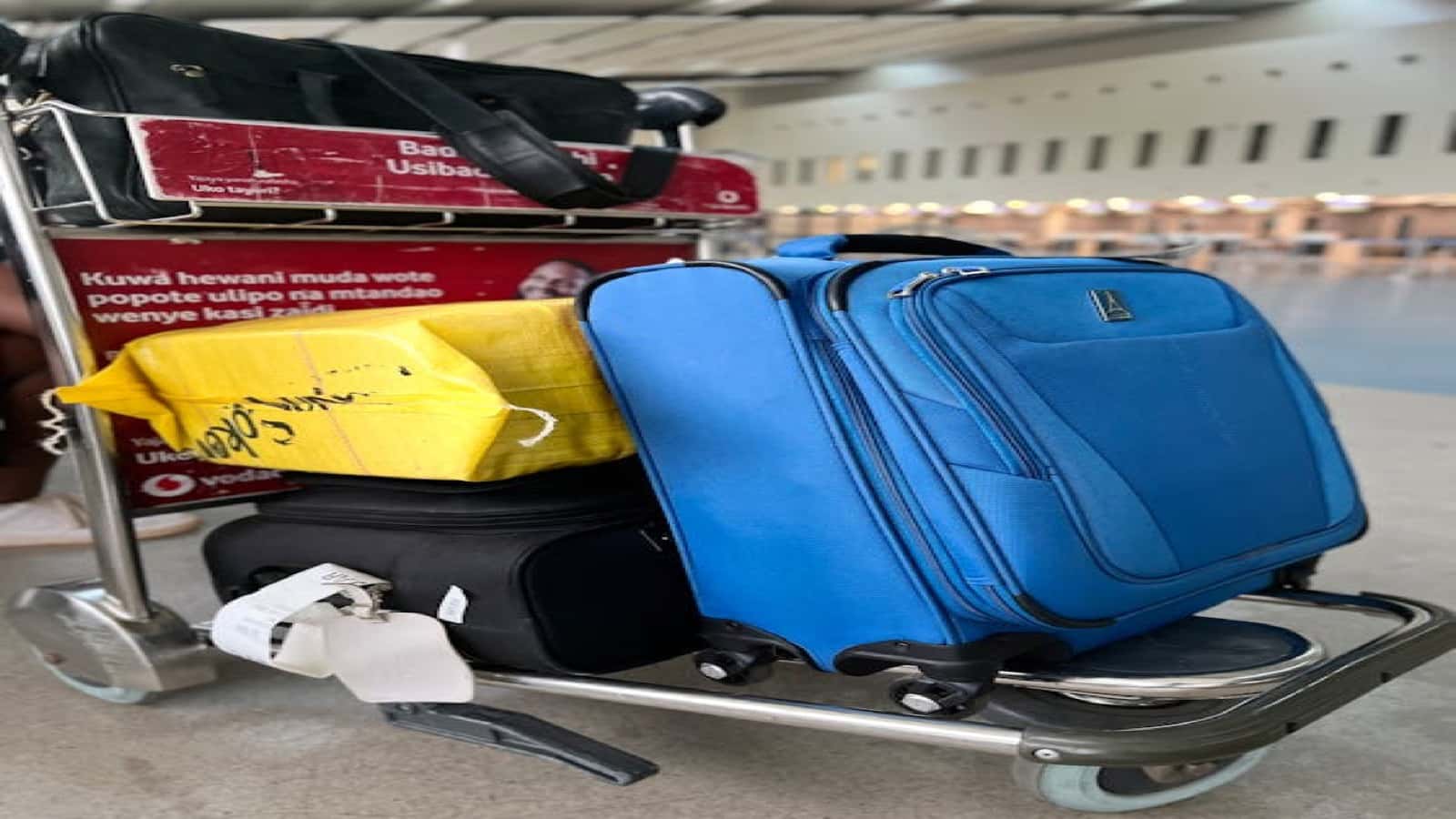
A $29 puck of plastic has quietly become one of the most-recommended travel accessories on the internet — not because it does much, but because it does one specific thing extraordinarily well: it tells you where your checked bag actually is, often before the airline knows. For travelers who check bags more than a handful of times a year, the math is so lopsided it barely qualifies as a decision. The harder question is what an AirTag doesn't do, and whether the privacy concerns you've read about apply to luggage use at all.
How we evaluated
This verdict draws on three categories of publicly available data: the US Department of Transportation's monthly Air Travel Consumer Reports, which publish mishandled baggage rates by carrier; community consensus from r/travel and r/onebag, where hundreds of AirTag-for-luggage posts have accumulated since the device launched; and Apple's publicly stated specifications for the AirTag and the Find My network it relies on. We have not personally tested any of the products discussed in this article. Every claim below is sourced from one of these public datasets.
The verdict
Worth-It Score: 8.5 out of 10. For anyone who regularly checks bags, an AirTag is essentially a no-brainer. At $29, the cost is recovered the first time it helps locate a mishandled bag — and DOT data shows mishandled baggage rates are high enough that frequent travelers are statistically likely to encounter at least one event within 20-30 flights. The score is not a 10 because the device is meaningfully less useful for Android-primary households, and because it supplements rather than replaces an airline's official baggage tracking process.
The evidence
What DOT baggage data actually shows
The US Department of Transportation publishes monthly Air Travel Consumer Reports that include mishandled baggage rates for every major US carrier. In recent reporting periods, US airlines have collectively mishandled approximately 5 to 7 bags per 1,000 enplaned passengers. That number sounds small until you do the multiplication: a traveler who checks bags on 30 round trips — roughly 60 flight segments — has a statistically meaningful probability of experiencing at least one mishandling event over that span. DOT data also shows the rate is not evenly distributed. Regional carriers and connecting hub itineraries consistently post higher mishandling rates than nonstop mainline routes, and a handful of carriers run materially worse than the industry average month after month. For a frequent checked-bag traveler, the question isn't whether a bag will eventually go missing — it's when, and how quickly you'll know.
What an AirTag actually does
Apple's Find My network uses the company's installed base of iPhones, iPads, and Macs as passive Bluetooth relay points. When an AirTag comes within Bluetooth range of any signed-in Apple device — anywhere in the world — that device anonymously and securely relays the AirTag's location back to its owner. Apple has publicly stated that the Find My network includes more than 2 billion active devices. In dense urban environments and major airports, which are saturated with Apple device users, location updates can arrive at near-real-time intervals. In remote rural areas, on cargo aircraft over open ocean, or inside metal-shielded baggage carts, updates can be delayed or temporarily absent. The hardware is straightforward: a Bluetooth LE chip, a U1 ultra-wideband chip for precision finding on supported iPhones, a small speaker, and a user-replaceable CR2032 coin cell battery rated by Apple for approximately one year of normal use.
What real travelers report
The r/travel and r/onebag subreddits have accumulated hundreds of posts documenting AirTag-for-luggage outcomes since the device's release. The consistent pattern in those threads: AirTags routinely surface information faster than the airline's own systems do. Community reports describe travelers landing at their destination, opening the Find My app, and seeing their bag still pinging at the origin airport — often hours before the airline's customer service desk could confirm the same fact. Other documented outcomes include tracking bags to offsite lost-and-found warehouses, locating bags accidentally sent to the wrong destination city, and in several cases identifying bags that were left on aircraft and continued flying to subsequent destinations before the airline noticed. The community verdict across these threads is nearly unanimous: at $29, the device is worth it for anyone who checks bags. The honest counter-data points are also documented. AirTags offer limited recovery utility if a bag is permanently stolen by someone using an Android phone, since Android's unknown-tracker detection is less aggressive than iOS's. And community reports note that some airlines' cargo holds and baggage handling systems intermittently interfere with Bluetooth reception, producing occasional gaps in tracking history.
The Android consideration
AirTag is an Apple ecosystem product. Setup requires an iPhone or iPad, and the full Find My experience — including precision finding via ultra-wideband — is only available to iPhone users. For Android-primary travelers, the Tile Pro at roughly $35 is the community-recommended alternative. Tile's network is meaningfully smaller than Apple's Find My, but it offers genuine cross-platform compatibility and works on Android as a first-class citizen. Community consensus on r/travel is consistent: choose AirTag if you and your household run on iPhones, choose Tile if you run on Android, and choose Tile for mixed households where the primary traveler uses Android. There is no honest case for putting an AirTag on a bag belonging to an Android-only traveler.
The privacy question, honestly
AirTags arrived with legitimate concerns about misuse for stalking, and those concerns have been documented in reporting and law enforcement records. Apple's response has been a layered set of anti-stalking features: an AirTag separated from its owner emits an audible alert after a period that ranges from roughly 8 to 24 hours; iPhone users automatically receive notifications if an unknown AirTag appears to be traveling with them over time; and Android users can install Apple's free Tracker Detect app to scan for unknown AirTags manually. Community discussion on r/travel acknowledges that the stalking concern is real and unresolved at the platform level, while consistently rating the luggage use case as ethically uncomplicated. Placing an AirTag inside your own checked bag tracks a piece of property you own, traveling on your own itinerary. It raises none of the consent issues that drive the broader privacy debate.
Who it's best for
For: Frequent checked-bag flyers
If you check bags five or more times a year, the probability math favors having an AirTag in every checked bag. DOT mishandling rates are low per-flight but high enough across an annual travel pattern that most frequent travelers will eventually experience an event. At $29, the device pays for itself the first time it surfaces information faster than the airline does.
For: International travelers on multi-leg itineraries
Connecting hubs are where bags get separated from their owners, and DOT data shows mishandling rates climb on connecting itineraries. International multi-leg trips compound the risk further, with bags potentially crossing carrier handoffs, customs zones, and continents. An AirTag is most useful precisely when the airline's tracking is least reliable — across carriers and across borders.
For: Travelers with tight connections
When a connection is tight and a bag may not have made it onto the second leg, knowing immediately matters. Community reports describe travelers landing, checking Find My before walking to baggage claim, and discovering the bag is still at the connection airport — enabling them to file a claim before joining the line of confused passengers waiting at the carousel.
What it doesn't beat
An AirTag does not beat the strategy of simply not checking a bag. If you carry on every trip, you do not need an AirTag for luggage tracking, full stop. It does not beat Tile Pro for Android-primary travelers who want consistent cross-platform behavior and full app functionality on their primary phone. And it does not beat the airline's own WorldTracer-based baggage tracking system for the purposes of filing an official claim, receiving compensation, or triggering the airline's recovery process. AirTag is a supplement to that process, not a replacement for it. The right mental model is straightforward: the airline owns the recovery, and the AirTag tells you what's actually happening while the airline figures it out.
Verdict
The Verdict
Apple AirTag (for luggage tracking)
Best For
Frequent checked-bag travelers who want real-time luggage location visibility and peace of mind
Beats
Airline baggage tracking apps on location accuracy and update frequency
Doesn't Beat
Tile Pro for Android-primary travelers, or simply not checking bags
Based on 3 data sources · Last verified May 1, 2026
Sources
- US Department of Transportation — Air Travel Consumer Reports (monthly mishandled baggage data by carrier)
- r/travel and r/onebag community consensus threads on real-world AirTag use in checked luggage
- Apple's publicly stated AirTag specifications, Find My network device count, and battery life claims